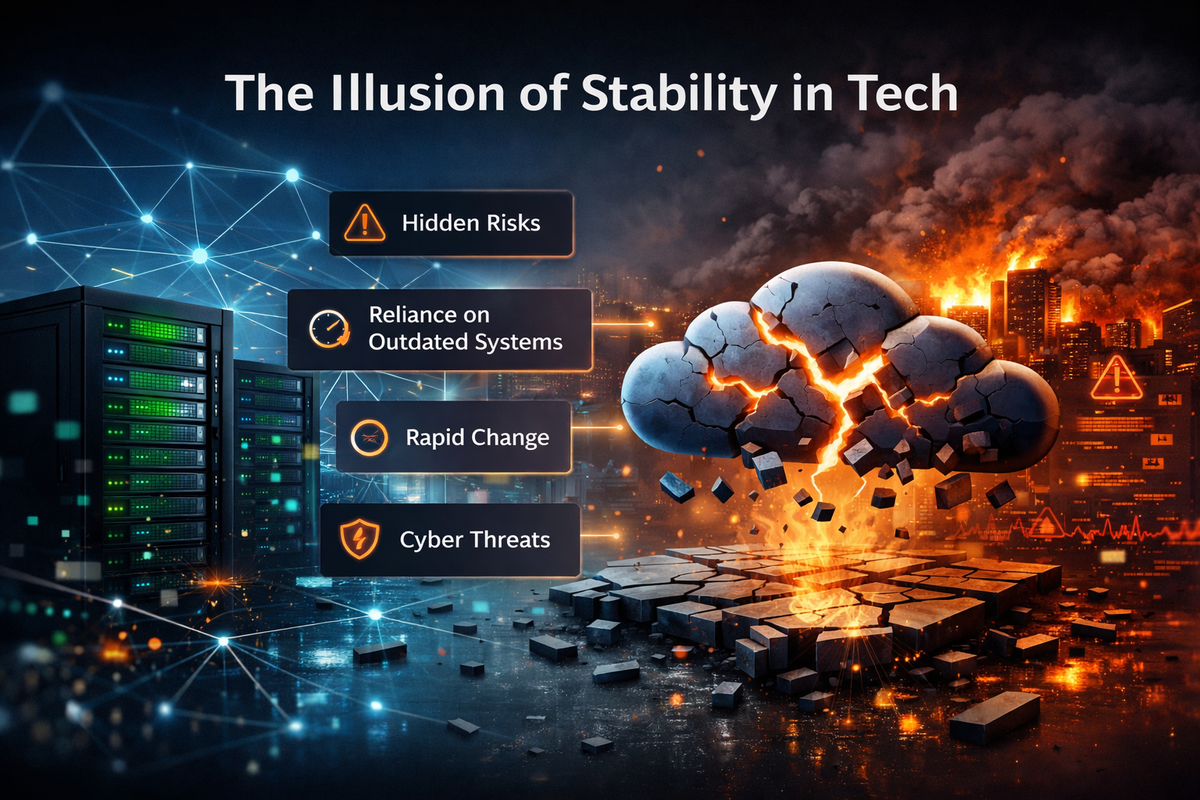
The Illusion of Stability in Tech
Modern tech systems often appear stable, but beneath the surface lie hidden risks, outdated dependencies, and fragile integrations. This illusion of stability can lead to unexpected failures when businesses least expect it.
The tool you were sure about last year is the problem you're trying to fix today. This keeps happening. We keep acting surprised.
There's a belief a lot of people in tech quietly hold onto: that things will eventually calm down. That the best tools will win, the debates will settle, and you'll finally be able to just build things without the ground shifting under you.
That day isn't coming. Not because the tech world is uniquely broken though it's pretty chaotic, but because change is kind of the whole point. The things that feel solid today are only solid because they're useful. And useful things attract competition, which brings change.
THE TRAP
Every developer knows this feeling: you finally get good at something. The code flows. Releases feel routine. Then slowly, then suddenly things shift. The framework you rely on gets abandoned. A service you've built on gets shut down. An update breaks everything.
"We don't own the technology we build on. We borrow it and nobody tells us when it's due back."
The real trap isn't that things change. It's that we plan as if they won't. We hire people for specific tools instead of their ability to learn new ones. We put off cleaning up old code because "we'll do it once things settle down." We build systems tightly coupled to one vendor because switching feels unnecessary until it suddenly isn't.
A Few Things That Were Supposed to Last
01. Big server apps
The obvious way to build software for years. Then came microservices, then serverless, then people questioning all of it again.
02. jQuery
In modern frontend work, it often signals an older codebase.
03. Your own servers
Running your own hardware felt like control. Then cloud computing made that feel slow and introduced a whole new set of things to depend on.
04. NoSQL as the future
Many NoSQL systems didn’t replace SQL they found narrower, specific roles. Meanwhile, Postgres kept expanding into their territory.
Why We Keep Falling for It
Part of it is just human nature. It's hard to tell the difference between "this is mature and reliable" and "this is old and about to be replaced." They look the same until the moment they don't.
But there's also money involved. The tech industry profits from novelty. Conferences need fresh topics. Software companies need new features to charge more. Investors need new ideas to fund. All of that pushes toward constant change and toward the story that the old way was wrong and the new way is finally right.
Something new arrives → people adopt it → it feels stable → someone points out its problems → a replacement shows up → repeat. We're usually two steps in before we realize we're going around the same loop again.
Where Stability Actually Lives
It's not that nothing is stable. It's just that stable things are usually underneath the surface, not on top of it. Tools and frameworks change constantly. The ideas beneath them often don't.
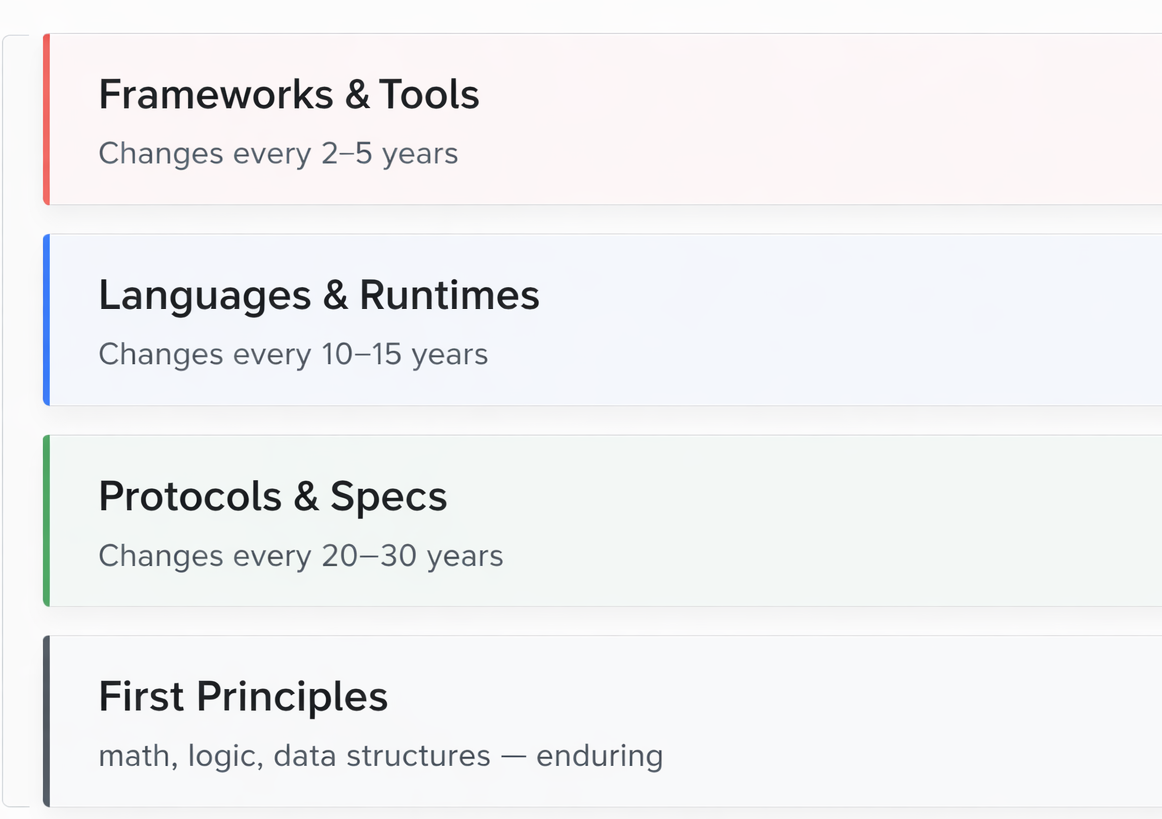
HTTP is 30 years old and still running the internet. The math behind databases was written in 1970 and hasn't needed updating. The principles hold. The implementations come and go.
The people who handle this best tend to be the ones who stopped looking for stability in specific tools and started building it into how they think. They care more about understanding problems deeply than picking the right tool quickly. They've learned to be a little sceptical when something promises to be the last thing they'll ever need to learn.
"The engineers who last aren't the ones who found solid ground. They're the ones who got comfortable without it."
What to Do About It
Once you stop expecting things to stay the same, you can actually build for the world as it is. That means loosely connected systems that are easier to swap out. It means choosing boring, proven tools where reliability matters and saving the new stuff for places where the risk is worth it. It means hiring for curiosity and adaptability, not just for knowing the current hot framework.
You also start reading tech hype differently. "X will replace Y forever" becomes something to note down, not something to act on immediately. You start noticing which tools have been claiming to replace each other for years. You notice what the long-lived projects have in common they tend to do one thing well, change slowly on purpose, and treat stability as something worth protecting.
The tech industry sells permanence. It delivers change. The smartest thing you can do is stop being surprised by that gap and build with it in mind.
You’re not building on solid ground. You’re building on something that’s already moving.
The only real decision is whether you pretend it isn’t.
The illusion of stability in tech is not a flaw in the system — it is a feature of how we perceive it.
Systems look stable right until they don’t. Platforms feel permanent until they pivot. Tools seem essential until they’re replaced overnight. What we call “stability” is often just a temporary alignment of demand, technology, and timing.
The real advantage does not come from betting on what feels stable.
It comes from building the ability to adapt when stability disappears.
Because in tech, nothing breaks suddenly — it was already shifting beneath the surface.
The ones who win are not the ones who found stability.
They are the ones who never depended on it.